
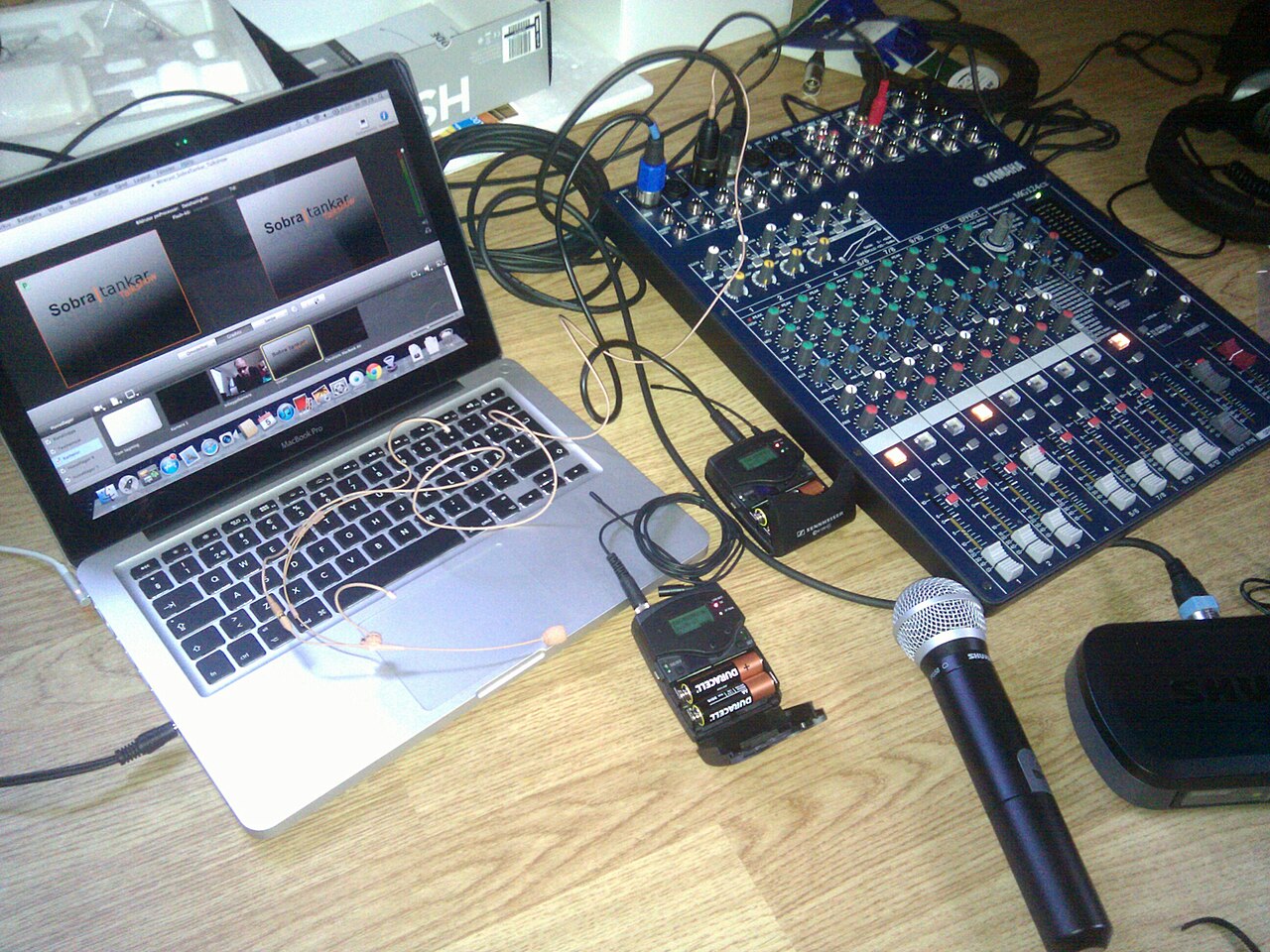
Master the Frequencies: Wireless Mics for Live Events
Wireless microphones are essential for dynamic live events, but their successful deployment hinges on meticulous frequency coordination. Learn how pros navigate the airwaves to keep audio clean and signals strong.
Running audio for any live event means wrestling with a dozen variables, but none are quite as invisible, or as capable of bringing a show to a screeching halt, as radio frequency interference with wireless microphones. Forget the panic; understanding frequency coordination isn't about black magic, it's about solid planning and knowing your gear.
Why Wireless? Freedom and Flexibility
The call for wireless microphones is obvious: untethered performers, engaging presenters, and dynamic panel discussions all demand the freedom of movement. Imagine a keynote speaker pacing the stage, connecting with every corner of the room, or a live band's lead singer working the crowd without tripping over a cable. From major concert venues to intimate podcast studios, wireless systems ditch the cabling mess, streamline stage setup, and open up possibilities for on-the-fly adjustments.
It's not just about mobility. Wireless systems can also significantly reduce trip hazards and improve the visual aesthetics of a stage or set. For a livestream, a clean stage translates directly to a cleaner shot, enhancing the viewer's experience. Whether it's a handheld for an interviewer, a lavalier for a panelist, or an instrument pack for a musician, the right wireless solution makes an event feel seamless and professional, provided you've got your frequency game locked in.
The Airwaves: Understanding Your Frequencies
At its core, frequency coordination is about giving each wireless device its own clear channel to transmit audio without colliding with another signal. Think of it like a multi-lane highway: everyone needs their own lane, or you've got a pile-up. In the world of wireless audio, that pile-up means dropouts, static, and noise. Every single wireless microphone system, in-ear monitor, and even some video transmitters, occupies a slice of the radio frequency (RF) spectrum.
The challenge intensifies with the increasing density of wireless devices, alongside ambient RF noise from cell phones, Wi-Fi, and broadcast television. Professional crews know that understanding the local RF environment and adhering to regulatory guidelines, like those set by the FCC in the United States, is non-negotiable. Using equipment that can scan and adapt to available frequencies is a fundamental step, allowing operators to identify clear channels and avoid conflicts.
Pre-Show Protocol: Scanning and Coordination
Before a single mic pack leaves its case, the real work begins. A thorough site survey is crucial. This involves not just a visual inspection of the venue, but an RF scan using dedicated spectrum analyzers or the built-in scanning features of professional wireless receivers. This scan identifies existing RF activity and potential interference sources. Based on this data, crews can then use coordination software to calculate compatible frequencies for all the wireless systems needed for the event. This software is smart, taking into account intermodulation distortion and other complex RF physics to assign optimal frequencies. It's about proactive problem-solving, not reactive troubleshooting during the show.
Choosing the right frequency band for your gear is also key. Different geographical regions and specific event types might favor UHF, VHF, or 2.4 GHz systems, each with its own propagation characteristics and regulatory considerations. Opting for professional-grade systems with wide tuning ranges and robust digital modulation can significantly improve your odds against RF interference.
Deployment and Diligence: Rigging and Testing
Once frequencies are assigned, it's time to rig the gear with precision. Antenna placement is paramount: line of sight between transmitter and receiver is not just a suggestion, it's a rule. Employing diversity antenna systems (often two antennas for one receiver) helps mitigate dropouts, as the receiver automatically switches to the antenna receiving the strongest signal. Receiver racks should be centrally located, away from large metal objects or other RF-emitting devices.
Rigging involves secure mounting, proper cable management, and careful gain staging at the receiver to optimize signal-to-noise ratio. After setup, comprehensive walk-tests are essential. This means having talent, or crew stand-ins, move through all areas they'll occupy during the event, checking for signal integrity and audio quality. Monitoring tools like RF sniffers or the receiver's own metering allow engineers to observe signal strength and potential interference in real-time. Establishing clear fallback plans, like pre-set alternative frequencies or even wired backup microphones, adds another layer of security against the unexpected.
For news this week, reports were primarily focused on consumer audio, with headlines such as Gear Patrol's update on new gadgets and hi-fi releases, and multiple outlets, including The New York Times, CNET, and Audiophile ON, reviewing headphones and earbuds. HT Tech reviewed the Sennheiser Momentum 4 Wireless. On the camera front, ChannelLife Australia reported that Blackmagic launched an ambisonic microphone for spatial audio, a development also noted by RS Web Solutions, AppleMagazine, and Sports Video Group, some specifically mentioning its application for iPhone. However, direct news regarding professional wireless microphones for live event frequency coordination was quiet this week.
Mastering wireless microphone deployment isn't about eliminating every possible RF challenge, but about minimizing risk through meticulous preparation, informed equipment choices, and a systematic approach to frequency coordination. When the show goes live, confidence comes from knowing you've done the homework.
