
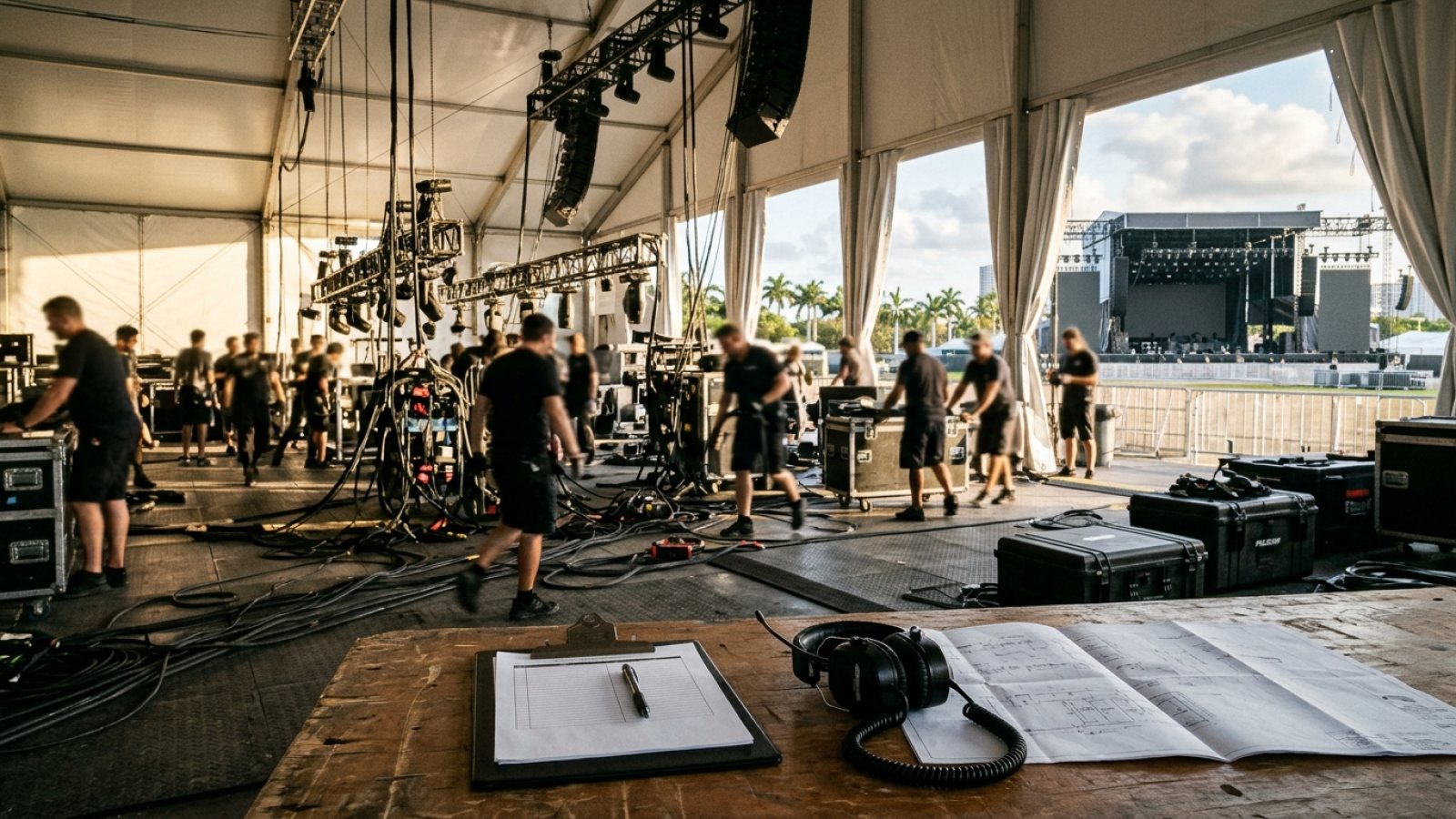
Deciphering the Roster: Key Roles on Your Event Production Crew
Understanding the core roles on a production crew is vital for any large-scale event. From the overarching vision of the Producer to the critical timing managed by the Stage Manager, each specialist contributes to a seamless show.
A successful event, whether it's a sprawling festival, a high-stakes corporate gala, or a surprise live performance like the one Maluma recently gave at Miami International Airport, hinges on a deeply collaborative and specialized production crew. Each role is distinct, yet intricately connected, ensuring every element from the sound mix to the stage lighting converges into a flawless experience. When you’re planning a significant production, knowing who does what on this vital team is your first step to effective communication and a smooth execution.
Big events frequently popping up on our radar, such as the upcoming Time To Drive Miami 2026 or the much-anticipated Art Basel Miami Beach, demand a meticulous orchestration of dozens, if not hundreds, of moving parts. A well-defined crew structure ensures that every technical and logistical challenge is met with expert hands.
The Visionaries and Orchestrators
At the apex of any production is the Producer. Think of them as the CEO of the event. They hold the ultimate vision, drive the creative direction, manage the overall budget, and are the primary liaison with the client. The Producer ensures the event’s purpose and aesthetic are consistently met, from the initial concept to the final bow. They're about the big picture, shaping the experience.
Working hand-in-glove with the Producer is the Production Manager. If the Producer is the visionary, the Production Manager is the chief architect and builder. This individual is responsible for transforming that grand vision into a tangible reality. They meticulously manage the budget, timeline, and logistics for every department, from staging and rigging to audio, lighting, and video. The Production Manager hires and oversees vendors, negotiates contracts, ensures safety protocols are met, and generally keeps the entire project on track and on budget. Their role is especially critical for complex multi-day events, coordinating everything from talent riders to local permits.
The Technical Architects
When it comes to making the lights flash, the screens glow, and the sound systems roar, the Technical Director (TD) is your resident engineering expert. The TD translates the creative designs from the Producer, Lighting Designer, and Video Engineer into practical technical specifications. They oversee all technical departments, ensuring that the audio, lighting, video, and staging systems not only work individually but also seamlessly integrate. The TD signs off on equipment choices, system designs, and installation methods, acting as the technical glue that holds the entire show together. They are often the problem-solver-in-chief when technical challenges arise, ensuring the show can go on, whether it's for a major concert tour like Turnstile’s ‘Never Enough Tour Pt. 2’ or a complex broadcast event.
The Lighting Designer (LD) is the artist who paints with light. They conceptualize and execute the lighting plot, creating the atmosphere and visual dynamics of the event. Working closely with the Producer and TD, the LD specifies lighting fixtures, designs intricate cue lists, and programs the lighting consoles to achieve specific looks and effects. Their expertise is crucial for setting the mood, highlighting performers, and guiding the audience’s focus, transforming a simple stage into an immersive environment.
The Sensory Engineers and Commanders
Sound is arguably the most critical component for audience engagement, and that’s where the A1 (Audio Engineer) comes in. The A1 is responsible for all things audio, from system design and tuning to microphone placement and live mixing. They ensure every word, every note, and every effect is crystal clear and perfectly balanced, working tirelessly to deliver an optimal sonic experience for every attendee. Often, an A2 supports the A1, managing microphones, cables, and on-stage monitoring. The quality of their work is paramount for any live broadcast or streaming event, such as watching the 2026 NASCAR Championship Race with Sling or a live football match.
Finally, the Stage Manager (SM) is the unsung hero who conducts the live show itself. The SM is the central communication hub backstage, calling cues for lighting, audio, video, and talent entrances. They maintain the show's timing and flow, manage talent, ensure safety on and around the stage, and communicate vital information between departments. Their precision and calm under pressure are indispensable for a smooth, punctual, and safe live performance. Events like the 2026 Design Miami fair, as reported by The Straits Times, involve intricate timing and multiple presentations that rely heavily on a highly capable Stage Manager.
Understanding these roles isn't just about jargon; it’s about recognizing the specialized expertise required to bring a large-scale event to life. Knowing who does what empowers you to communicate effectively with your production team, ensuring your vision is not only understood but flawlessly executed. When you partner with a professional production company, you're tapping into this established hierarchy of expertise, ensuring every detail is managed by a dedicated specialist.
