
Mastering Sound: Line Arrays, Monitors, and the FOH Mix for Big Rooms and Open-Air Events
Producing stellar sound for a massive arena or an expansive outdoor festival requires a specialized approach, moving far beyond simple speaker placement. We break down the critical roles of line array systems, stage monitors, and the nuanced front-of-house mix in delivering an unforgettable audio experience.
Delivering pristine audio to thousands of people in a vast indoor space or across an open field is a complex dance of physics, technology, and expert ears. It's not just about turning up the volume; it's about precision, clarity, and ensuring every attendee, from the front barrier to the back row, experiences the intended sound design. This is where the power of modern sound systems, particularly line arrays, and the art of the front-of-house mix truly shine.
The Precision of Line Arrays for Audience Coverage
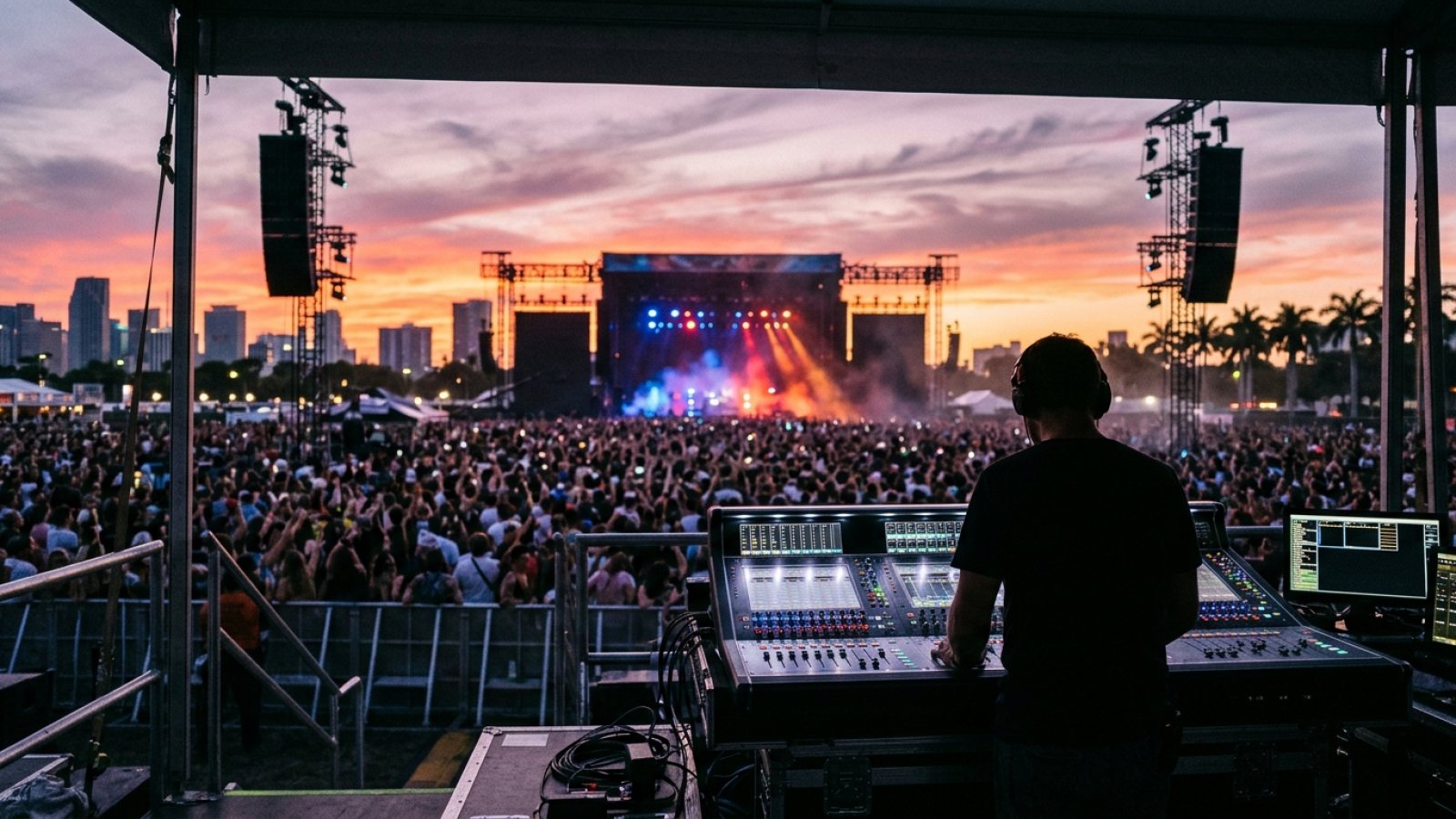
Walk into any major concert, festival, or large-scale convention in Miami, and you’ll inevitably see towering columns of loudspeakers flanking the stage: these are line arrays. Unlike traditional point-source speakers, a line array system comprises multiple identical loudspeakers arrayed vertically, designed to couple acoustically and project sound with exceptional control over a long distance. This configuration minimizes unwanted sound dispersion, keeping the audio focused on the audience and away from ceilings or open air where it would simply dissipate or create echoes.
The magic of a line array lies in its ability to create a coherent wave front, allowing engineers to shape the sound’s vertical coverage precisely. This means that whether you're standing close to the stage or far back in the venue, the sound pressure level and tonal balance remain remarkably consistent. Designing a line array system for an event is a meticulous process, often involving sophisticated acoustic modeling software that simulates the venue's exact dimensions and acoustics to determine speaker quantity, angles, and placement for optimal coverage. Events like the upcoming 'Grand Theft Auto VI: The Festival' in Miami, featuring headliners like Travis Scott and Cardi B, or the Don Toliver performance on November 21, heavily rely on these complex systems to cover vast festival grounds.
Monitors: The Performer's Lifeline
While the audience hears the grand, meticulously crafted front-of-house mix, the performers on stage need their own distinct sound environment. This is where stage monitors come in. A monitor system allows artists to hear themselves and their bandmates clearly, crucial for timing, pitch, and overall performance coherence. Without effective monitoring, even the most seasoned musicians can struggle.
There are generally two types of monitors you'll encounter. Traditional wedge monitors are speaker enclosures placed on the stage floor, angled up towards the performer. These are often seen at rock concerts, providing a powerful, direct sound. Increasingly common, however, are in-ear monitors (IEMs). These custom-fitted earbuds provide a highly isolated and personalized mix directly to the performer's ears, offering superior clarity, consistent sound regardless of stage position, and reducing stage volume, which can lead to a cleaner front-of-house mix. Beyond personal monitors, sidefills – larger speakers placed at the sides of the stage – provide a broader, more impactful sound to fill the stage for the entire band.
The Front-of-House (FOH) Mix: Crafting the Audience Experience
At the heart of the audience's sonic experience is the front-of-house (FOH) mix position. Often located centrally within the audience area, this is where the FOH engineer, equipped with a digital mixing console and an array of outboard gear, sculpts the sound. Their role is to take all the individual signals from microphones and instruments on stage and blend them into a cohesive, impactful, and clear audio presentation for the crowd.
The FOH engineer is responsible for everything the audience hears: setting levels, applying equalization (EQ) to shape tones, adding effects like reverb or delay, and ensuring the mix translates well across the entire venue. This requires not only technical proficiency but also a keen musical ear and an understanding of the artist's vision. The FOH position is also where the engineer communicates with the monitor engineer and often the technical director to address any sound-related issues in real-time. It’s a demanding role that directly impacts how an event is perceived.
Seamless Integration and Expert Execution
The successful deployment of line arrays, monitor systems, and the front-of-house mix is not about individual components, but about their seamless integration and the expertise of the audio crew. From the initial system design and calibration to the final real-time mix adjustments during a show, every detail matters. When planning a large event, collaborating with an experienced production team early in the process ensures your sound system is perfectly matched to your venue, audience size, and artistic requirements, guaranteeing a powerful and clear audio experience for everyone involved.
