
The Shure MV7i and the Smart-Mic Wave: What to Check Before You Build a Podcast Desk Around One
Smart microphones like the Shure MV7i offer an integrated approach to audio capture, combining a microphone with an audio interface in one unit. Before committing your podcast setup to this streamlined path, it pays to understand the implications for connectivity, scalability, and your workflow.
When it’s time to dial in your audio setup for a new podcast or livestream, the allure of a clean desk and minimal gear is strong. Enter the smart microphone, exemplified by units like the Shure MV7i, which aim to simplify the signal chain by integrating key components into a single device. These mics pack not just a transducer, but also a built-in audio interface, digital signal processing (DSP), and often both USB and XLR outputs. It's a powerful combination for many, but before you center your entire podcasting universe around one, it's critical to understand its place in your evolving workflow.
The Appeal of Integrated Design
The core proposition of a smart microphone is convenience. By offering both USB and XLR connectivity, a mic like the Shure MV7i allows for a direct-to-computer setup via USB-C, complete with headphone monitoring right off the microphone itself. This means you can plug straight into a laptop or desktop and get studio-quality audio without needing a separate audio interface, mixer, or dedicated headphone amplifier. This integrated design is ideal for solo podcasters, gamers, or livestreamers who prioritize a compact footprint and quick setup. The on-board DSP often provides tools like gain control, EQ, and compression directly within a companion application, putting crucial audio adjustments at your fingertips without needing external plugins or hardware.
Connectivity and Ecosystem Considerations
The dual USB/XLR output is a game-changer, but it also necessitates some planning. When operating via USB, the microphone acts as its own audio interface. This is excellent for simplicity, but consider your system's capabilities. Are you running a powerful desktop or a more constrained mobile device? USB power draw and data throughput can be factors, particularly with longer cable runs or if your system is already burdened. While USB offers immediate plug-and-play functionality, traditional XLR connectivity, when paired with a dedicated audio interface, typically offers more robust signal integrity over longer distances and often greater flexibility in sample rates and bit depths for complex recordings. It also separates the microphone's input from your computer's general USB bus, which can sometimes reduce potential interference or latency issues, especially when you start stacking multiple USB devices.
Flexibility and Future-Proofing Your Rig
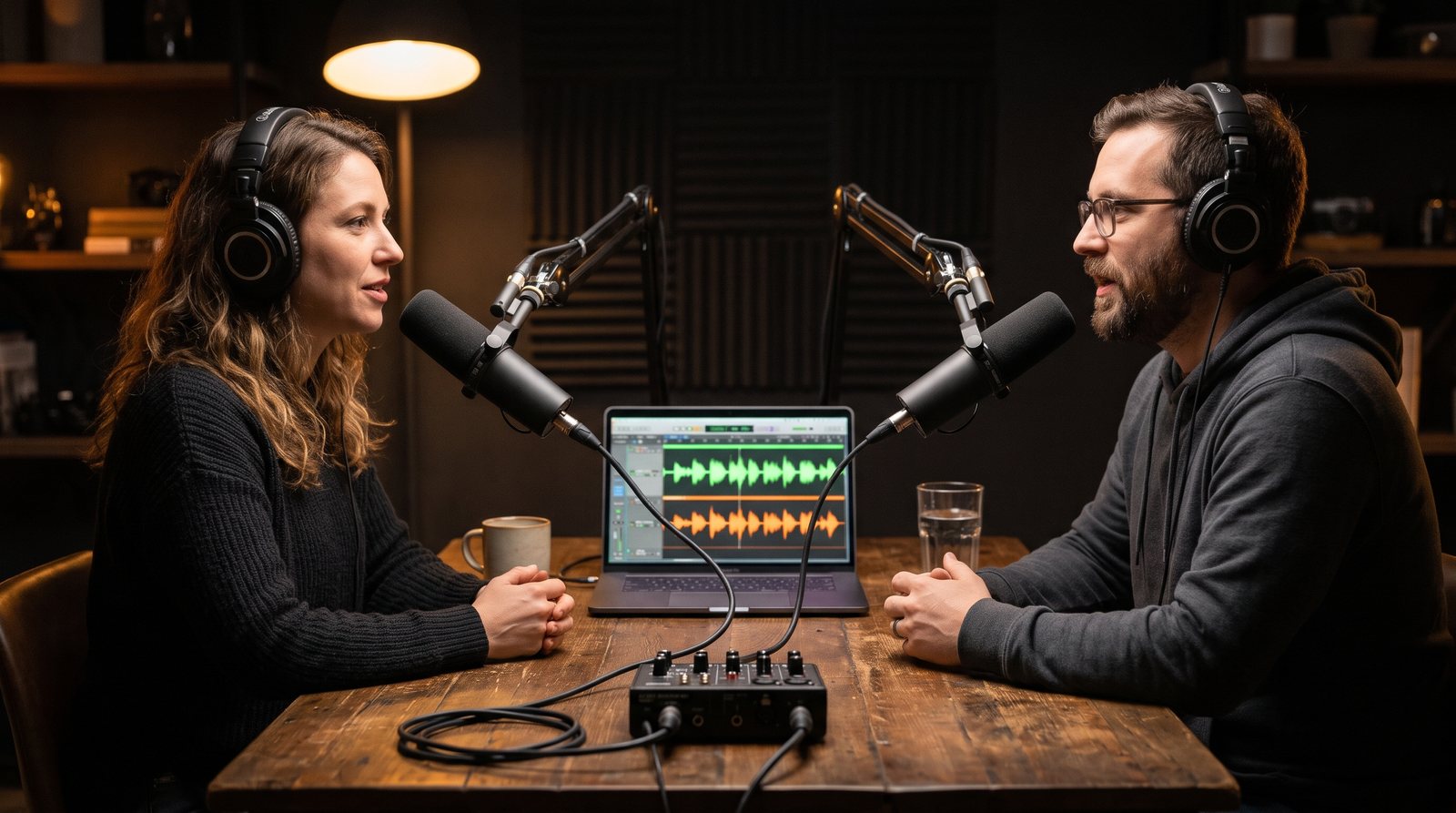
The "smart" features are built for a specific use case, primarily single-user scenarios. If your podcast intends to expand to multiple hosts or guests, you will quickly face a decision point. Adding a second smart microphone often means you'll still need a multi-channel audio interface to combine their signals, effectively bypassing the smart mic's built-in interface for the USB connection. At that stage, you might find yourself wishing for traditional XLR-only microphones feeding into a versatile interface. Consider how the mic's companion software integrates with your digital audio workstation (DAW). While helpful for basic control, ensure it doesn't lock you into a workflow that prevents future upgrades or changes to your processing chain. The value of a dedicated external preamp or compressor, for example, is that it can be swapped out or upgraded independently of the microphone itself, offering a modularity that built-in DSP cannot match.
What's Happening in the Audio World This Week
Speaking of gear, it's worth noting the constant evolution across the audio landscape. This week, The Verge reported that Shure's popular podcasting and streaming mic is almost $50 off, making a compelling case for those looking at the MV7i. Elsewhere in microphone technology, Sonicstate mentioned a new Sontronics Wireless Microphone Capsule, indicating ongoing advancements in untethered audio capture. In the headphone and earbud space, Cubed3 reviewed the Sennheiser HD 206 Wired Headphones, while Memeburn offered a review of the Sennheiser MTW5, discussing its sound, ANC, and battery swap features. SoundGuys noted a shift in loyalty from AirPods to Sennheiser earbuds. The earbud market also saw significant activity with BigGo Finance reporting that Audio-Technica is set to launch new flagship earbuds in Japan on November 20, featuring noise cancellation that auto-adjusts to fit. Notebookcheck corroborated this, stating Audio-Technica's new flagship earbuds made their Tokyo debut with noise cancellation adapting to each ear, and Tech Times added that these new Audio-Technica earbuds are built for Android 17’s new native codec. The broader picture shows an industry consistently pushing innovation in audio capture and reproduction, from studio mics to personal listening devices.
Ultimately, a smart microphone like the Shure MV7i delivers exceptional convenience and quality for many single-user setups. However, before integrating it as the core of your podcasting desk, assess your long-term goals. If your vision includes multiple participants, complex routing, or a desire for independent hardware processing, understanding the limitations and exploring options for traditional XLR microphones paired with a versatile audio interface could save you from having to re-rig your entire setup down the line.
